

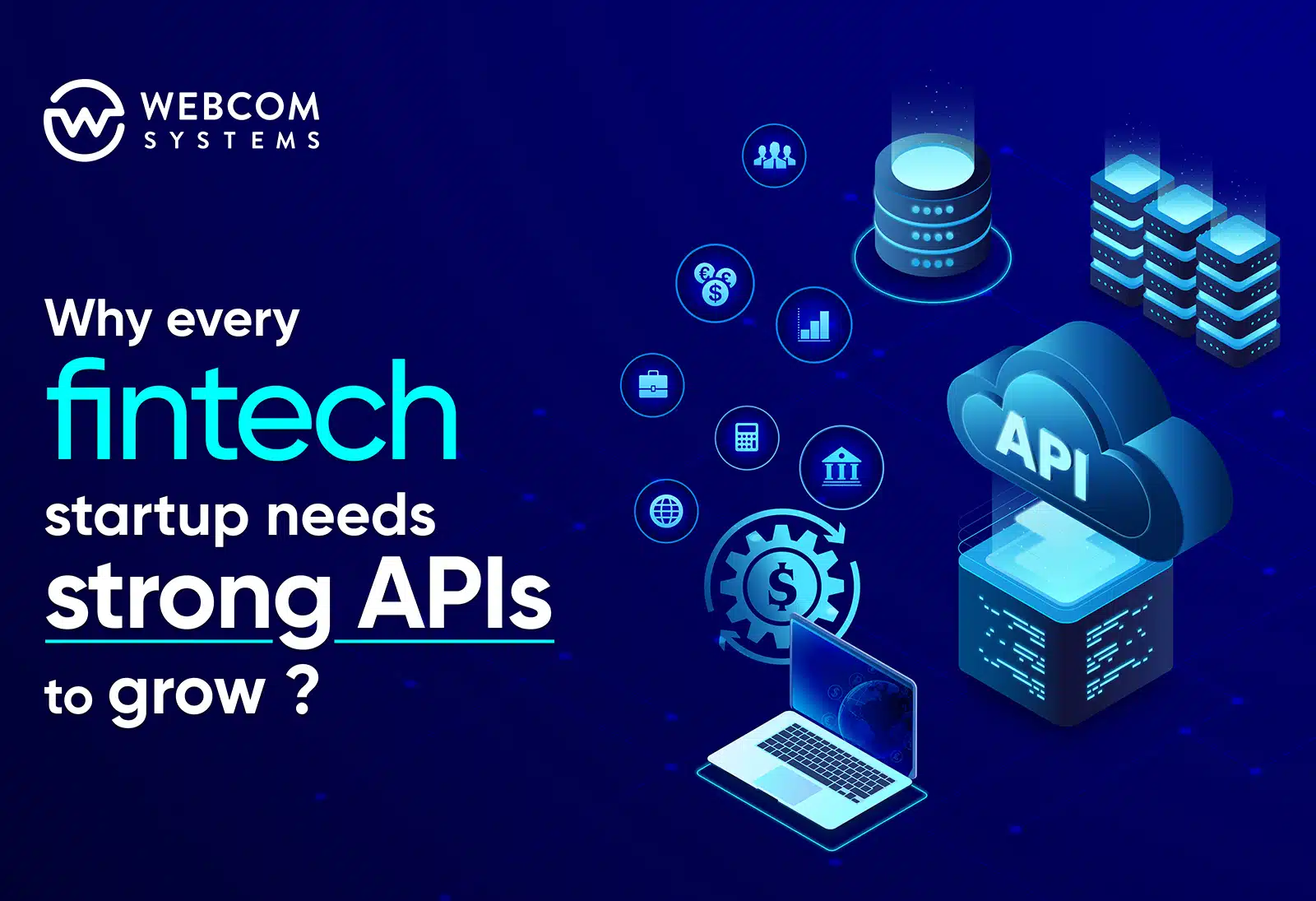
APIs (Application Programming Interfaces) have become a crucial component of the fintech industry. Companies no longer need to rely on outdated software; instead, they utilise the remarkable capabilities of APIs to enhance their financial services. From banking applications to lending platforms or even digital payment gateways, these APIs can connect different services, share data, and support essential platform features.
For any fintech firm that is just starting out, integrating strong APIs in fintech solutions can make a big difference in how smoothly the startup operates and grows to mark business success.
In this blog, we’ll explain what APIs are and why they play such a key role in business growth.
What Exactly Is An API In Fintech?
API stands for Application Programming Interface. In Fintech, API refers to a set of regulations and protocols that assist various fintech software solutions to interact with one another. Thus, basically, an API acts as a link between different financial platforms, services or solutions and facilitates smooth integration and data exchange.
As a result, rather than developing a solution from scratch, fintech companies can integrate various types of APIs, such as:
- Open Banking APIs
- Payment Processor APIs
- Currency & Crypto Exchange APIs
- Financial Data Aggregator APIs
- Credit Scoring & Lending APIs
- Investment APIs
- Insurance APIs
- KYC APIs
- RegTech APIs
- Fraud Detection APIs
- Accounting APIs
For example, many fintech development companies incorporate various banking APIs and payment APIs into business platforms. It gives customers more options for paying for their purchases through various payment methods.
How Does An API In Fintech Work?
Let us better understand how a fintech API works. Check out the detailed description below.
- First, the fintech platform user uses a third-party application to create a request.
- The user request is confirmed and approved by the API. It verifies that the user is authorised to access their financial information.
- Now, this API retrieves financial data from the financial institution.
- The retrieved data is formatted so that the third-party application can comprehend it and use it further.
- The user can finally receive the information sent by the API via the third-party application.
Also Read: Top Fintech Trends Shaping The Future Of Finance In 2025
What Are The Benefits of Using Strong APIs For Fintech Startups?
Fintech startups can benefit from a variety of opportunities through API integration with their fintech platforms, as listed below:
Cut High Infrastructure Expenses
Any fintech startup aiming to offer financial services needs to invest heavily in developing a comprehensive framework, managing operations, and ensuring regulatory compliance. However, by integrating strong APIs, fintech businesses don’t have to hire specialists or allocate extensive resources to build a full infrastructure, as these APIs can provide access to various third-party services.
By saving on hefty infrastructure costs, fintech companies can channel more resources into expanding their business, improving services, acquiring more customers, and much more.
Faster Market Entry
Building extensive infrastructure for fintech companies isn’t only a resource-demanding process but a time-consuming one as well. However, the plug-in model of APIs allows fintech companies to quickly install the required features, such as payment gateways, currency conversion tools, RegTech systems, fraud detection solutions, or more. With this approach, fintech firms can quickly launch their fintech solutions in the market without waiting for months or even weeks, typically needed for traditional infrastructure development.
Increase System Security and Ensure Compliance
To protect the highly sensitive data shared via APIs, they are engineered with the highest level of security protocols that actually make them robust. End-to-end encryption, authentication, tokenization, authorisation, and other safeguards protect data during exchange from security breaches and unauthorised access.
Furthermore, RegTech APIs maintain compliance with major regulatory bodies through transparent and secure customer data management. Thus, fintech startups can comply with data protection laws such as the General Data Protection Regulation (GDPR), Payment Card Industry Data Security Standard (PCI DSS), Second Payment Services Directive (PSD2), and others.
Ensure Scalability Right From The Start
Every fintech startup starts small and grows as the business catches up with the pace. Thus, the transaction volume is initially lower, but fintech solutions would need to eventually handle the increased transaction volume, as well as the data and user base.
As a result, the more robust the API, the easier it will be to manage increased workload as the business grows. It can adeptly handle data exchange between external systems, databases, and servers. Businesses do not have to invest in new infrastructure or disrupt the entire system, as the powerful APIs ensure scalability in the future.
Boost the Customer Experience
Improving customer service is essential for driving growth for every business. Thus, a fintech company that strives to provide a better customer experience and improve its service reliability may eventually succeed in the fintech industry.
Fintech businesses can integrate multiple robust APIs into a single fintech solution, each with unique functionalities such as credit scoring, payment processing, identity verification, fund management, and more. It eliminates the need for users to shift between different platforms and deal with numerous manual data inputs. Not only that, but they can provide all of their services directly from their mobile devices, eliminating the need to physically visit banks or payment institutions to complete their transactions.
As a result, it promotes a better customer experience, improves customer retention rates, and enhances the company’s reputation.
Enhance Product Portfolio
Fintech startups can work with banks, other fintech companies, and even non-financial organisations to broaden their product offerings using APIs. Thus, a fintech industry can improve its offerings not only within its sector but also through cross-industry collaborations to expand beyond traditional limitations. For example, banks can use API-driven fintech platforms to allow their cardholders to access services like entertainment, retail shopping, dining and much more.
Future-Proofing Fintech Businesses
Fintech is all about innovation, so fintech businesses must evolve constantly. A fintech startup can integrate APIs to adopt emerging technologies such as artificial intelligence, blockchain, the Internet of Things, open banking solutions, and more. This allows them to innovate their services without the need to completely overhaul their existing systems and adapt to changing market changes and outshine their competitors.
Excellent Use Cases of APIs in FinTech
Here are some real-world examples of how leading FinTech companies are using APIs to power their services:
- Digital banks, also known as Neobanks, such as Revolut and GoCardless, use mobile banking apps powered by APIs to provide customers with mobile-first banking experiences.
- Adyen’s API streamlines the payment experience for ebay users.
- Plaid’s Investments API provides full access to users’ investments, allowing for a more personalised user experience. As a result, platform users can view their transaction history, available balance, assets, and other information to improve their investment and wealth management practices.
- Wise enables cross-border payments through API integrations, eliminating the need for intermediaries and reducing both cost and time.
- Trulioo’s API automates KYC (Know Your Customer) and AML (Anti-Money Laundering) checks and ensures compliance with global jurisdictions.
- MoneySuperMarket is a comparison platform for financial products. It allows customers to compare and select rates, services, and offers from various distributors through APIs.
Final Thought
APIs are transforming the fintech industry, and for good reasons. Any fintech startup can use robust APIs to develop secure, compliant fintech platforms that improve customer experience, enhance their portfolio, and propel them to success.
If you are looking to develop an innovative fintech solution fitted with highly functional APIs for your business, we can assist you. Webcom Systems is a leading FinTech Software Development Company that has over two decades of experience developing fintech solutions for both startups and established businesses. We can create fintech products for your company and integrate the appropriate APIs for the desired business operations, whether it’s banking, payment, lending, compliance, or something else. Get in touch to discuss your project.
Also Read: How Digital KYC Streamlines Customer Onboarding in FinTech
Related Posts

Webcom Systems Pty Ltd is a technology development and consulting company that builds blockchain, Web3, digital currency, NFT, DeFi, remittance, and related software solutions. Our role is strictly limited to providing software development, technical architecture, and strategic consulting services. We do not provide financial, investment, brokerage, exchange, asset management, taxation, legal, or trading services to businesses or individuals. We do not operate financial institutions, manage client funds, execute trading operations on behalf of users, or offer investment, tax, or legal advice of any kind.
Any legal compliance, license, regulatory approval, government registration, permit, KYC/AML implementation, and any other statutory obligation must be obtained and managed entirely by the client. Webcom Systems Pty Ltd does not assist in obtaining licenses or regulatory approvals from any authority.
All information provided on our website, marketing materials, proposals, and communications is for general informational purposes and does not contain investment, legal, or financial advice specific to you. You may rely on this information strictly at your own risk. No particular piece of information issued by us constitutes a proposal or request for a proposal to invest. We do not recommend, endorse, or sponsor any assets, securities, companies, or funds.
Clients are entirely responsible for conducting independent due diligence and are professionally advised to seek assistance from licensed financial advisors, legal counsel, and regulatory professionals to make such critical choices. Webcom Systems Pty Ltd accepts no liability for any decisions or financial consequences of your investment decisions.
Risk WarningInvesting and trading in financial markets involve a high level of risk. The value of financial products may fluctuate significantly, and you may lose part or all of your invested capital. It is preferable to fully comprehend how different financial products work before making any investment decisions. You should also carefully evaluate your financial situation, investment goals, and risk tolerance, and consider all risks involved before investing.
Error: Contact form not found.