

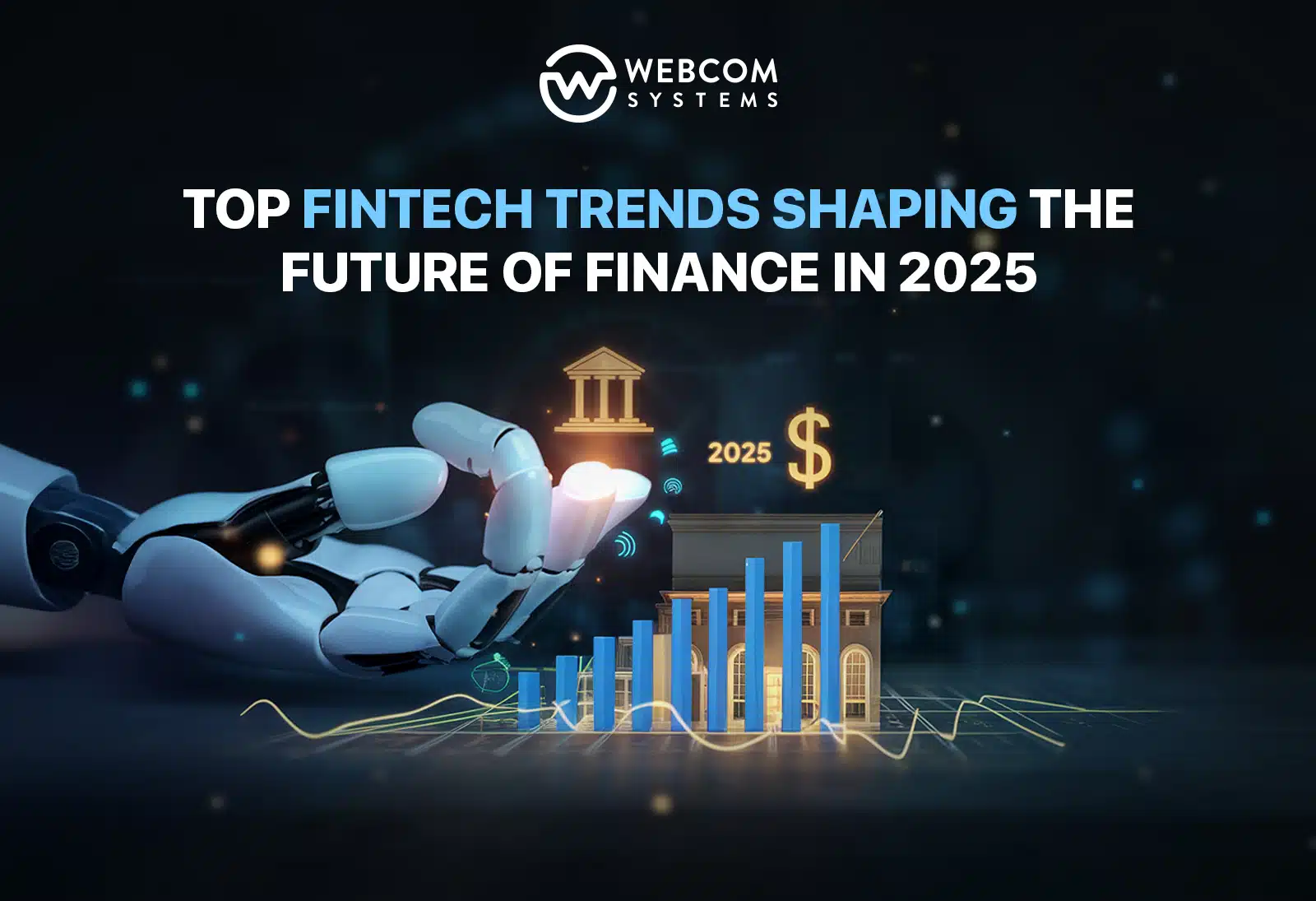
Financial technology (Fintech) has clearly driven innovation in financial services over the last few years. This advanced technology gives financial institutions digital tools and fintech solutions to help them improve their operations and provide much better services to their customers.
According to recent reports, the Fintech sector, which was valued at $79.38 billion in 2023, is expected to increase even further to $141.18 billion over the next five years. Besides, 2026 is likely to be the year with the greatest rise in this growth due to the new emerging fintech trends. From AI technology to blockchain, RegTech, IoT, Super apps, and more, they are bringing a change that is shaping the future of financial services. Read this article to learn more about these fintech trends.
Key Fintech Trends Transforming Finance
With the latest fintech trends emerging in 2026, financial services are becoming smarter, faster, and more secure as follows:
Personalised Financial Assistance With AI
Financial institutions are increasingly investing in AI technology to provide customer-centric services and improve client satisfaction as well. This innovative technology employs smart computational systems to automate tasks that typically require manual intervention. AI-based fintech solutions that utilise data, machine learning, deep learning, and other digital models not only replicate human intelligence but also provide hyper-personalised experiences to customers.
For example, AI-powered chatbots and virtual assistants can be used for easy and efficient management of enquiries related to services, balance, payment tracking, account updates, and more. AI algorithms can also be trained to provide financial assistance, detect suspicious activities and unusual user patterns, automate customer support, and more.
Blockchain Technology Disrupting Traditional Financial Models
Blockchain technology, once primarily associated with cryptocurrencies, has evolved much more than digital currencies. It is a distributed ledger technology that allows the secure recording and independent verification of transactions without involving intermediaries.
- In 2026, financial institutions are creating immutable records of their financial transactions using blockchain platforms such as Solana, Ethereum, Ripple, Avalanche, and more.
- People use cryptocurrencies for investments, cross-border money transfers, trading, and payments. By incorporating more security and speed in the transactions, cryptocurrencies are changing the way traditional financial structures work.
- Blockchain is also fueling new digital economies through NFTs (non-fungible tokens). Creators can tokenise their work as digital assets to prove ownership and facilitate buying, selling, and trading.
- The unique DeFi model has emerged by integrating blockchain into fintech that enables secure peer-to-peer lending, borrowing, and trading of digital assets without centralised control.
Innovative Collaboration Through Bank as a Platform (Baap)
Financial institutions benefit from completely new revenue streams by sharing their banking infrastructure with outside providers. This Bank-as-a-Platform (BaaP) partnership provides access to core banking functions like lending, payments, insurance, and other digital financial services. Fintechs and businesses are developing various business models using this banking infrastructure to offer more personalised services to customers.
Improving Trust With Cybersecurity and Fraud Prevention
Cybersecurity, powered by the latest technologies, secures the financial industry against potential cyberattacks. The most common reason for financial system exploitation is the use of weak and repetitive passwords, which exposes all financial data to risk.
Instead of fragile, weak password authentication, data security is achieved through the use of innovative protocols such as device-based authentication and magic links. In addition, the following approaches are being used to create a multi-layered defence system and ensure data security and client safety in financial services:
- Biometric technologies such as fingerprint verification, facial recognition, and voice authentication are used for secure user verification.
- Behavioural authentication to spot suspicious activity by checking parameters like user activity, typing speed, navigation, etc.
- Multi-factor authentication (MFA) reduces the risk of unauthorised access by utilising multiple layers of verification, including device recognition, biometrics, and OTPs.
By employing cybersecurity and fraud prevention systems, businesses prevent scammers from accessing financial services and instil trust among customers about system security.
Also Read: Why Is Blockchain Development Crucial for Financial Applications?
Integration with non-financial platforms
In 2026, there is an increase in the embedding of financial services into non-financial platforms such as e-commerce websites, social media platforms, and more. Small to medium-sized businesses (SMBs) can benefit the most from this integration by enhancing the management of their financial services. For example, platforms like Amazon Prime, Netflix, and Instagram can process payments directly from their platforms for a better customer experience. Moreover, platforms can enhance their offerings to banking, insurance, lending, and more to widen their offering scope.
Compliance with RegTech solutions
RegTech, short for Regulatory Technology, refers to the use of technology to maintain compliance with regulations in financial operations. By employing major technologies like AI and big data, RegTech not only assists financial enterprises in monitoring their business processes but also in identifying regulatory violations or potential risks.
RegTech solutions help financial systems meet specific regulatory obligations and generate compliance reports. Companies can submit to regulators to confirm compliance with legal requirements and avoid fines. However, it is crucial to note that compliance with regulations is essential not only for validating the legitimacy of services but also for protecting systems against fraud and cyberattacks.
The Rise of Financial Super Apps
Super apps are the most popular market topic in the fintech market. WeChat (China), Alipay (China), Grab (Southeast Asia), and Revolution (Europe) are common examples of super apps.
This year, leading FinTech development companies like Webcom Systems are creating innovative super apps that can handle payments, investing, insurance, banking, budgeting, lending, credit scoring, wealth management, and more, all from one place. Furthermore, some amazing apps combine payment management with gaming, entertainment, and shopping. Hence, users can avoid switching between apps, and financial institutions can increase customer trust by expanding their offerings.
Sustainability In Fintech Solutions
In 2026, financial institutions are actively prioritising green and sustainable initiatives, such as reducing carbon footprints, promoting renewable energy programs, and carrying out recycling initiatives. Besides, customers are becoming more aware of the importance and impact of green fintech solutions, which has contributed to the significant integration of these programs. One example is green fintech platforms that track users’ carbon footprints based on their spending. They also help users buy carbon credits to limit their emissions.
IoT Technology Enhancing User Experience
The Internet of Things (IoT) is the biggest innovation of this century that allows multiple devices to work collectively and seamlessly by collecting and exchanging data. Fintech companies are making good use of IoT technology to deliver smart solutions and real-time financial services such as customised banking notifications, connected payment systems, and more. Integrating IoT into financial services has helped to improve operational efficiency and customer experience.
Wrapping Up
The fintech trends of 2026 are unquestionably bringing massive change and collectively shaping the future of finance. Customers are benefitting from personalised experiences and faster, more secure financial services, while businesses are improving their operations flow and finding new opportunities for success. Webcom Systems is a leading Fintech development company in Australia that specifically engineers fintech solutions for emerging enterprises. Whether you wish to build a secure payment platform or integrate AI into your financial services, we can help. Get in touch to know more.
Also Read: How Blockchain Can Reshape Trade Finance?
Related Posts
Webcom Systems Pty Ltd is a technology development and consulting company that builds blockchain, Web3, digital currency, NFT, DeFi, remittance, and related software solutions. Our role is strictly limited to providing software development, technical architecture, and strategic consulting services. We do not provide financial, investment, brokerage, exchange, asset management, taxation, legal, or trading services to businesses or individuals. We do not operate financial institutions, manage client funds, execute trading operations on behalf of users, or offer investment, tax, or legal advice of any kind.
Any legal compliance, license, regulatory approval, government registration, permit, KYC/AML implementation, and any other statutory obligation must be obtained and managed entirely by the client. Webcom Systems Pty Ltd does not assist in obtaining licenses or regulatory approvals from any authority.
All information provided on our website, marketing materials, proposals, and communications is for general informational purposes and does not contain investment, legal, or financial advice specific to you. You may rely on this information strictly at your own risk. No particular piece of information issued by us constitutes a proposal or request for a proposal to invest. We do not recommend, endorse, or sponsor any assets, securities, companies, or funds.
Clients are entirely responsible for conducting independent due diligence and are professionally advised to seek assistance from licensed financial advisors, legal counsel, and regulatory professionals to make such critical choices. Webcom Systems Pty Ltd accepts no liability for any decisions or financial consequences of your investment decisions.
Risk WarningInvesting and trading in financial markets involve a high level of risk. The value of financial products may fluctuate significantly, and you may lose part or all of your invested capital. It is preferable to fully comprehend how different financial products work before making any investment decisions. You should also carefully evaluate your financial situation, investment goals, and risk tolerance, and consider all risks involved before investing.
Error: Contact form not found.