

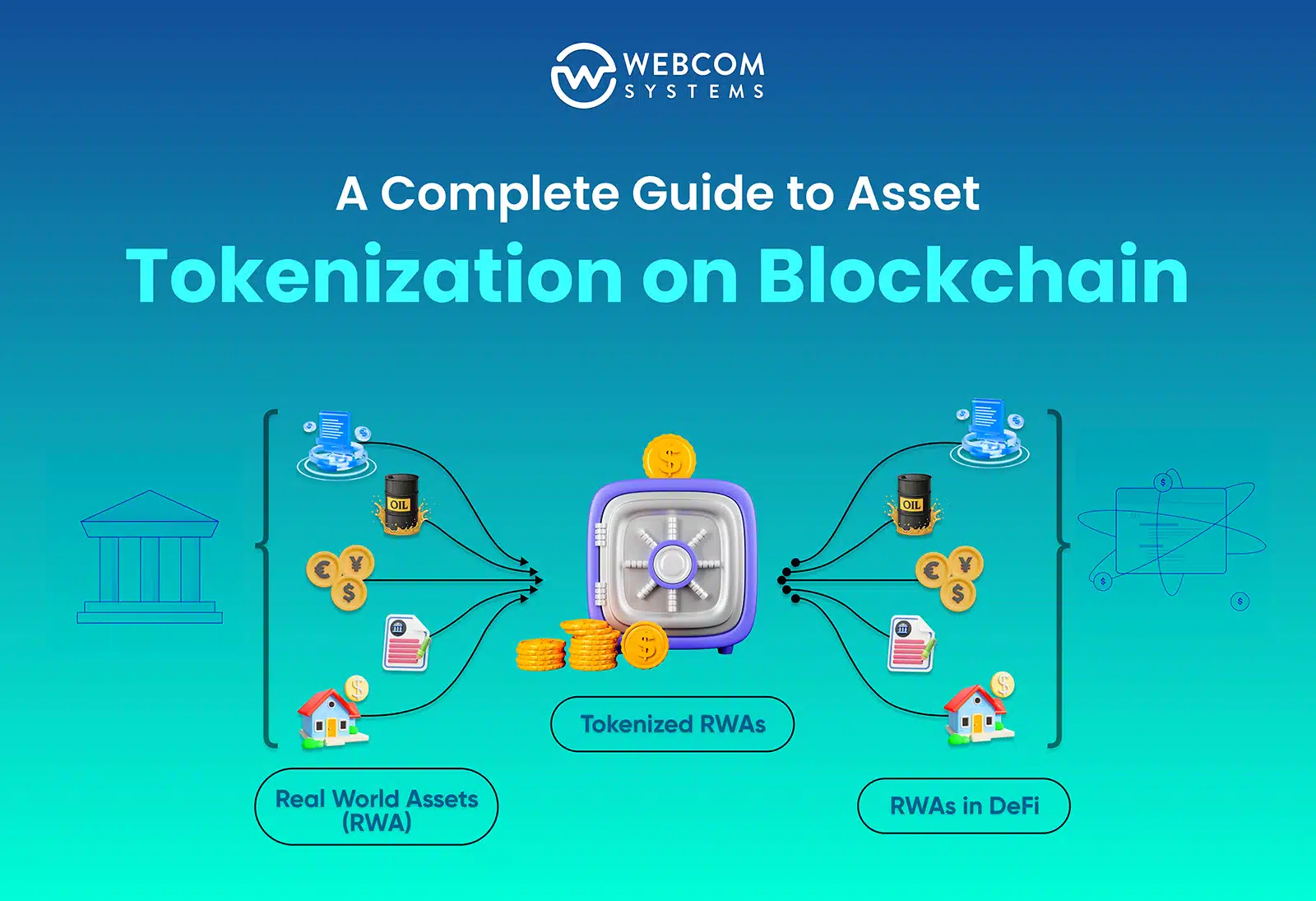
A Complete Guide to Asset Tokenisation on Blockchain
Category : Blockchain / by Andrew
Asset tokenisation has gained public attention following the tokenisation of renowned artworks, such as Andy Warhol’s painting “14 Small Electric Chairs (1980).” Blockchain development offers a remarkable application that allows you to tokenize various assets, including artworks and real estate properties, to digitize ownership on the distributed ledger.
In 2024, the market for asset tokenisation was valued at USD 3.32 billion and is projected to grow to USD 12.83 billion by 2032. Thus, it is all set to experience a massive boom in the near future. But how does asset tokenisation actually work, and why is it so significant? Let us explore this in greater detail.
What Is Asset Tokenisation On Blockchain?
Asset tokenisation refers to the process of converting a tangible or intangible asset into a digital token on a blockchain network. This tokenised asset represents a specific ownership stake, access rights, or utility on the blockchain network. This tokenisation process enables the buying, selling, and transferring of different assets within the blockchain ecosystem.
Custom blockchain development allows you to divide a tangible asset into smaller parts and tokenize each one as a unique token. For example, if a property is worth $500,000, you can split it into 500,000 tokens, with each token representing a 0.0002% ownership share of the property. While purchasing an entire property can be difficult for most people, investing in tokens with fractional ownership is much easier.
Different Types of Tokens Existing In The Blockchain Space
Different types of tokens exist within decentralised networks. Here is the list of all of them:
- Security Tokens
Security tokens, like traditional assets, have a certain value and are eligible for voting rights and dividends.
- Utility Tokens
Instead of serving as an investment option, utility tokens serve a specific functional purpose within the blockchain network by providing access to a particular service or product.
- Stablecoins
A crucial component of the blockchain ecosystem, stablecoins are reliable assets that represent fiat money or commodities.
- Non-Fungible Tokens (NFTs)
Digital assets like digital art, collectibles, and more that signify distinct value on the blockchain are known as non-fungible tokens, or NFTs.
- Equity Tokens
Equity tokens serve as a decentralised variant to conventional stock ownership by digitising ownership rights in a business.
- Debt Tokens
As the name suggests, debt tokens symbolise debts and loans. These tokens can be used for borrowing and lending activities within the blockchain ecosystem.
What Are The Benefits Of Asset Tokenisation On Blockchain?
Tokenisation of these assets on the blockchain provides access to a decentralised, immutable, transparent, and secure ledger. As a result, blockchain assists in the secure and effortless creation, transfer, and management of digital assets. Let us look at these advantages in more detail:
- Enhanced Liquidity
For increased liquidity, traditional assets can be tokenised into tradable digital tokens, despite their extremely low or restricted liquidity.
- Improved Security
Tokenised assets are impervious to fraud and cyberattacks because they inherit the characteristics of blockchain, such as transparency, tamper resistance, and the use of cryptographic mechanisms.
- Better efficiency and Cut costs
Blockchain’s distributed ledgers don’t need intermediaries or excessive paperwork, simplifying processes and cutting transactional costs. Furthermore, smart contracts are used to specify terms and automate transactions.
- Fractional Ownership
Real asset tokenisation can be used to split up ownership of different assets into smaller, more manageable fractions.
- Better Transparency
The distributed ledger of blockchain technology is accessible to all network participants and can be used to verify ownership of tokenised assets.
- 24/7 Market Access
Blockchain-based systems run constantly because they don’t require human intervention. As a result, blockchain-tokenised assets are available for trading at any time.
- Portfolio Diversification
Asset tokenisation provides new investment opportunities for investors, allowing them to diversify their portfolios and increase returns.
- Regulatory Compliance
Tokenised assets comply with the necessary regulations, allowing investors to operate within a legal framework.
- Global Accessibility
Blockchain tokenisation improves global token accessibility by eliminating regional restrictions, complicated currency conversions, and barriers to international transactions.
Also Read: Is Tokenization the Future of Real Estate Investing?
Different Applications Of Digital Assets Tokenisation
Many industries benefit from the various applications of asset tokenisation in the following ways.
- Finance
The fintech industry is using asset tokenisation for different purposes, such as product structuring, margin lending, payments, investment, etc. It helps to overcome barriers commonly found in stocks, bonds, and other traditional investment options, such as extreme complexity, geographical boundaries, and high entry barriers.
- Art and Collectibles
The art and collectibles industry can use asset tokenisation to tokenise artwork, collectibles, and other assets that hold enormous value. This blockchain development application is extremely useful for artists as they can easily tokenise and sell their masterpieces without the need for intermediaries.
- Healthcare
With blockchain asset tokenisation, healthcare facilities can digitise several operations, such as the medical supply chain, patient data management, as well as financial transactions. Custom blockchain development also enables organizations to tokenize more sensitive patient medical data, such as PANs and NPPIs, to improve security and prevent data breaches.
- Sports
From increasing fan engagement to improving player contracts and team ownership, the sports industry benefits from asset tokenisation on blockchain. Ownership rights of sports teams can be fractionalized and tokenised so that fans can also invest and profit from the teams’ success. Additionally, by tokenising passes or tickets as non-fungible tokens (NFTs), they can be traded and sold as iconic assets.
- Supply Chain
Blockchain technology allows the tokenisation of supply chain materials, products, or goods as assets. It helps to increase supply chain transparency and monitor the authenticity and journey of tokenised materials.
- Real Estate
In the real estate industry, real estate assets can be tokenised to access fractional ownership, where property ownership can be divided into smaller and tradable units. Thus, investors from worldwide can invest in high-value properties with reduced barriers to market entry and cross-border investments. Additionally, smart contracts are used to reduce transaction times and costs by executing automated transactions without the need for middlemen.
How Asset Tokenisation on Blockchain Works?
Regardless of the sector, teams use a systematic approach to tokenize physical assets and transform them into digital tokenized assets. The greater the precision and expertise in this blockchain development process, the more effective the tokenised assets are.
- Identification of Assets
The asset is first identified as commodities, real estate, artwork, etc., rather than immediately moving into tokenisation.
- Asset Valuation
Now, analysts conduct extensive market research to understand and determine the asset’s value.
- Legal Compliance
After determining the asset’s industry and value, legal experts gather and examine all applicable laws and regulations. It assists in ensuring the whole tokenisation process complies with these regulations.
- Smart Contract Development
Design and code the smart contract that sets the conditions for the token’s utilisation, ownership, and transfer.
- Platform Selection
Developers carefully select a blockchain platform based on the required token functionality to issue or manage the tokens.
- Token Issuance
After ensuring the token complies with the chosen blockchain standard, developers mint the tokens on the blockchain network.
- Asset Fractionalization
If required, you can divide the asset into multiple fractions, typically done for valuable assets to improve liquidity and make them more accessible to the public.
- Deployment
Finally, issuers bring the tokens to the market for trading and investment through an exchange or online marketplace.
Conclusion
After learning the advantages and applications of asset tokenisation, it is clear that this industry is creating new opportunities for investment, ownership, and trading. Further, as blockchain technology continues to evolve, asset tokenisation will present more possibilities in the future. Being at the frontier of innovations in blockchain technology, Webcom Systems offers blockchain development solutions to help businesses seamlessly tokenise their assets and access new business prospects. Contact us to know how we can assist you with your asset tokenisation project.
Also Read: What Is Blockchain Technology & How Does It Work?
Related Posts
Webcom Systems Pty Ltd is a technology development and consulting company that builds blockchain, Web3, digital currency, NFT, DeFi, remittance, and related software solutions. Our role is strictly limited to providing software development, technical architecture, and strategic consulting services. We do not provide financial, investment, brokerage, exchange, asset management, taxation, legal, or trading services to businesses or individuals. We do not operate financial institutions, manage client funds, execute trading operations on behalf of users, or offer investment, tax, or legal advice of any kind.
Any legal compliance, license, regulatory approval, government registration, permit, KYC/AML implementation, and any other statutory obligation must be obtained and managed entirely by the client. Webcom Systems Pty Ltd does not assist in obtaining licenses or regulatory approvals from any authority.
All information provided on our website, marketing materials, proposals, and communications is for general informational purposes and does not contain investment, legal, or financial advice specific to you. You may rely on this information strictly at your own risk. No particular piece of information issued by us constitutes a proposal or request for a proposal to invest. We do not recommend, endorse, or sponsor any assets, securities, companies, or funds.
Clients are entirely responsible for conducting independent due diligence and are professionally advised to seek assistance from licensed financial advisors, legal counsel, and regulatory professionals to make such critical choices. Webcom Systems Pty Ltd accepts no liability for any decisions or financial consequences of your investment decisions.
Risk WarningInvesting and trading in financial markets involve a high level of risk. The value of financial products may fluctuate significantly, and you may lose part or all of your invested capital. It is preferable to fully comprehend how different financial products work before making any investment decisions. You should also carefully evaluate your financial situation, investment goals, and risk tolerance, and consider all risks involved before investing.
Error: Contact form not found.