

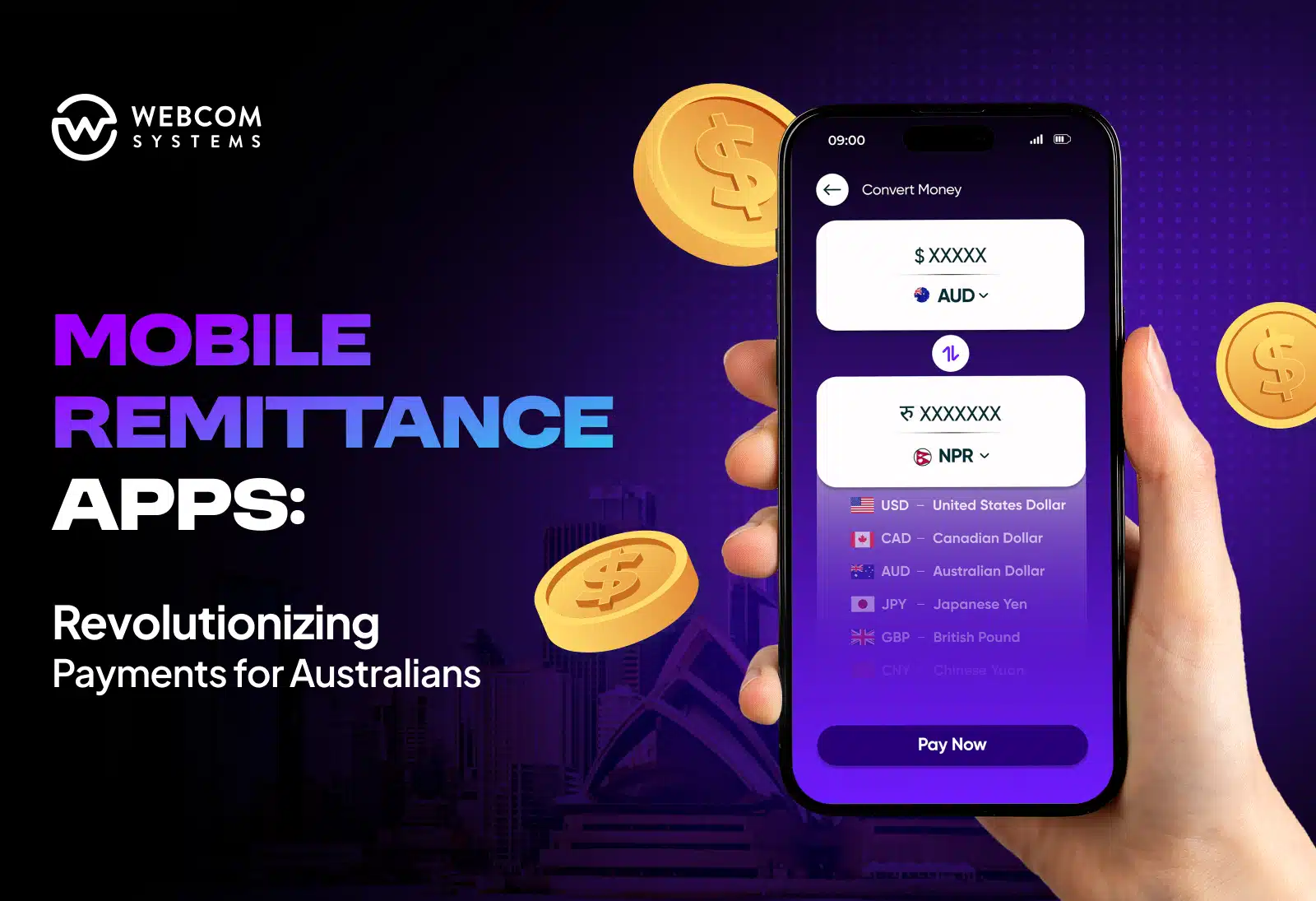
Mobile Remittance Apps: Revolutionising Payments for Australians
Category : Money Remittance Software / by Andrew
Australia is one of the top contributors to worldwide remittances, with US$25 billion sent abroad in 2024. These cross-border payments build personal relationships between the remitters and their loved ones across borders to pay for education, living, and other necessities. Not just this, cross-border payments help companies expand and facilitate operations on an international scale.
As mobile applications have offered convenience for a variety of services in Australia, from shopping and communication to travel and entertainment, they also facilitate cross-border money transfers. No matter the reason for sending money, whether it’s personal or business, most remitters in Australia utilise mobile remittance apps for international money transfers. Let’s understand the role of Remittance App Development in transforming international payments for Australians in detail.
Understanding Mobile Remittance Apps
Mobile remittance apps are digital platforms designed for smartphones, iPhones, and tablets that allow users to transfer money to recipients anywhere in the world. These apps simplify international transactions by allowing users to send money electronically instead of relying on physical cash or time-consuming banking visits.
Equipped with all the features and tools to process international payments, mobile remittance apps combine speed, convenience, and transparency in fund transfers. They include functionalities like real-time currency conversion, transaction tracking, instant transfers, and much more.
Thus, these apps serve as a window to everything a remitter needs to manage international payments, all from the palm of their hand.
Essential Features Of Mobile Remittance Applications
Mobile Remittance Apps are thoughtfully and professionally fitted with a certain set of features that offer convenience to process complex international payments with so much ease. Here are the key features that are typically considered during remittance software development:
Multiple Payment Options
Some remitters prefer the reliability of bank-to-bank transfers, while some like the quickness of e-wallet transfers. Thus, to cater to diverse needs, remittance apps typically support multiple payment methods, including:
- Direct Debits
- Debit and Credit Cards
- Bank Transfers
- POLi Payments
- E-wallet Payment
- Other Region-Specific Payment Options
Diverse Delivery Methods
Just like the options in payments, these apps provide a diverse range of payment delivery options based on the provider’s business model and user requirements. Common delivery methods include:
- Cash Pickup at Designated Locations
- Direct Bank Deposits
- Mobile Wallet Transfers
- Other Alternative Payout Channels
Thus, with options in both payment and delivery methods, the remittance app allows all the service providers to serve the users with different needs and preferences.
User-Friendly Interface
Remittance apps are made with an intuitive user interface to meet the standards of a great mobile application. Regardless of the complexity of the payment networks behind them, these apps prioritise simplicity to enhance the experience of users accessing the platform. Thus, users do not need technical knowledge to use the app for remittances.
Real-Time Transfer Tracking
Platform users can track the status of their money transfer from the moment they create the money transfer request till the point the money reaches the recipient.
Exchange Rate Alerts
Exchange rates are volatile and fluctuate according to a variety of factors. They influence the actual value of the money received. These remittance apps display live exchange rates and even provide real-time updates on any deviations via the app alert feature.
Security
Mobile remittance apps are fitted with bank-level security and integrated with security protocols like advanced encryption, multi-factor authentication, biometric login, fraud detection mechanisms, and much more.
Compliance
A remittance app conducts financial transactions in accordance with applicable local and international laws and regulations, such as anti-money laundering (AML) and counter-terrorism financing (CTF) requirements.
Also Read: Money Remittance Software for P2P Payments
How Does A Mobile Remittance App Work?
All of the functionalities of the remittance app come together to process international transactions and provide an effortless remittance experience. Here’s how a first-time user can use the app, from downloading it to successfully completing a money transfer:
Download App
First, the user installs the remittance app on their mobile device via an app store such as the App Store, Google Play, etc.
App Account Setup
Now, the user creates an account on the application. They need to enter basic information and verify their identity by providing government-issued ID documents such as a passport, ID photo, or driver’s licence.
Initiate Money Transfer
After the account has been verified, the user can use the app to create a money transfer request. They need to provide the recipient’s name, contact number, currency, transfer amount, and any other information required.
Funding the Account
Once done, the user can fund remittance transactions using their bank account, credit card, digital wallet, or other provided payment mode.
Payment Processing
The money transfer app would process payments through different payment channels. During the processing, it is ensured that every piece of information is encrypted to secure the transaction.
Tracking
App users can check the status of the transfer using the account tracking feature and even turn on notifications for live tracking updates.
Payment Completion
Both parties will receive completion notifications once the payment has arrived at the recipient’s bank account, mobile wallet, or other chosen method of transfer.
Role of Mobile Remittance Apps In Improving Payments in Australia
As the Australian government is encouraging cashless financial transactions, remittance apps are offering mobile-based online transfers. This fintech innovation has redefined how cross-border payments are made as follows:
Improving Convenience and Accessibility
Previously, remitters had to free up some time and visit banks that were only open on business days. Plus, they had to wait for hours in queues and fill out paperwork before they could create the request.
But! With remittance apps, users can create a request for an international money transfer at any hour of the day or even the week. They only need to provide their personal information once. After that, they can create multiple transactions by filling out the recipient details, which takes only a few minutes.
Lightning-Fast Cross-Border Payments
Where bank transfers used to take weeks to process the payments, the remittance app can do it in a few minutes or hours. Thus, remittance apps not just reduce the time to request the money transfer, but they also quicken the process for the recipient as well.
This speed helps the Australian remitters to pay for family emergencies as well as businesses to speed up the fund transfers for faster business growth.
Simplifying Remittance Experience
Remittance apps have intuitive user interfaces that make using these apps much simpler and don’t require any additional skills or knowledge. Additionally, it offers a real-time tracking feature that allows you to monitor the status of transactions. Users can even turn on alerts and notifications to receive necessary updates without having to open the app.
Increasing The Value Of Transfers
The traditional mode of remittance actually involves multiple intermediaries to make the transaction possible. This can result in higher operational costs, additional transfer fees, and unfavourable exchange rates, which particularly affect low-value transfers.
However, mobile remittance apps streamline the payment process by reducing intermediaries and eventually providing low service fees. By minimising costs, mobile remittance apps improve the value of every transfer so that more of the money reaches the recipient.
Moreover, many apps also provide full transparency in fee structures, so remittance app users know exactly how much will be received.
Security & Reliability In International Payments
Security has been a concern in the remittance transactions for Australian Remitters. However, remittance apps have helped in securing their personal and financial information due to the use of advanced security technologies. Also, the apps maintain compliance with international regulations, which allows the financial authorities to make sure that the platform is free from any illegal activities.
Supporting Financial Inclusion
Traditional banking services are unavailable in many countries and in certain regions of countries. As a result, Australian remitters had difficulty transferring funds to these regions.
Remittance apps have helped to increase access to remittance transactions in areas without a formal financial system. This financial inclusion not only impacts Australian remitters but also helps these countries improve their financial situations and economic growth.
End Note
Remittance transactions in Australia directly as well as indirectly contribute to improving national economies, reducing poverty, improving nutrition, and even assisting trade worldwide. Among the various channels, Mobile Remittance Apps are the most preferred mode of these transfers due to the convenience, security, and quickness they offer in international payments.
Webcom Systems is the leading remittance software development company that builds these feature-rich remittance apps for both mobile and web platforms. Most remittance service providers rely on our remittance solutions to provide convenient cross-border money transactions in Australia with a few taps. If you want to develop or improve your remittance platform, connect with us to discuss and build a strong remittance solution for your enterprise.
Also Read: Tips for Developing a Secure Remittance Software System
Related Posts
Webcom Systems Pty Ltd is a technology development and consulting company that builds blockchain, Web3, digital currency, NFT, DeFi, remittance, and related software solutions. Our role is strictly limited to providing software development, technical architecture, and strategic consulting services. We do not provide financial, investment, brokerage, exchange, asset management, taxation, legal, or trading services to businesses or individuals. We do not operate financial institutions, manage client funds, execute trading operations on behalf of users, or offer investment, tax, or legal advice of any kind.
Any legal compliance, license, regulatory approval, government registration, permit, KYC/AML implementation, and any other statutory obligation must be obtained and managed entirely by the client. Webcom Systems Pty Ltd does not assist in obtaining licenses or regulatory approvals from any authority.
All information provided on our website, marketing materials, proposals, and communications is for general informational purposes and does not contain investment, legal, or financial advice specific to you. You may rely on this information strictly at your own risk. No particular piece of information issued by us constitutes a proposal or request for a proposal to invest. We do not recommend, endorse, or sponsor any assets, securities, companies, or funds.
Clients are entirely responsible for conducting independent due diligence and are professionally advised to seek assistance from licensed financial advisors, legal counsel, and regulatory professionals to make such critical choices. Webcom Systems Pty Ltd accepts no liability for any decisions or financial consequences of your investment decisions.
Risk WarningInvesting and trading in financial markets involve a high level of risk. The value of financial products may fluctuate significantly, and you may lose part or all of your invested capital. It is preferable to fully comprehend how different financial products work before making any investment decisions. You should also carefully evaluate your financial situation, investment goals, and risk tolerance, and consider all risks involved before investing.
Error: Contact form not found.